


Japan’s powder can feel like a world away, especially during summer. Ski films capture the magic of quiet forests, deep snow, and endless fun.
Red Bull’s Saisho is a great example. The skiing is phenomenal. But a few scenes raise questions about the rules and responsibilities of visiting Japan, where some laws differ from those in a visitor’s home country. Japan’s mountains are not just a winter playground. They are home to working communities, residents, infrastructure, and cultural spaces.

Mt. Yotei rises behind the Red Bull skiers in Saisho. Image: Red Bull Media House
This is not an argument against going off-piste. Japan offers some of the best backcountry opportunities in the world. But visiting another country comes with a dose of responsibility and common sense. Here are a few basic rules and laws that may differ from your home country to remember when driving through the mountains, exploring the streets, or heading into the backcountry.
Just one drink…
In Saisho, the athletes are briefly shown enjoying beers beside their vehicle after filming. It’s hard to resist an Asahi Super Dry after a long day on the snow. But it is also a good moment to look at Japan’s approach to drinking and driving.
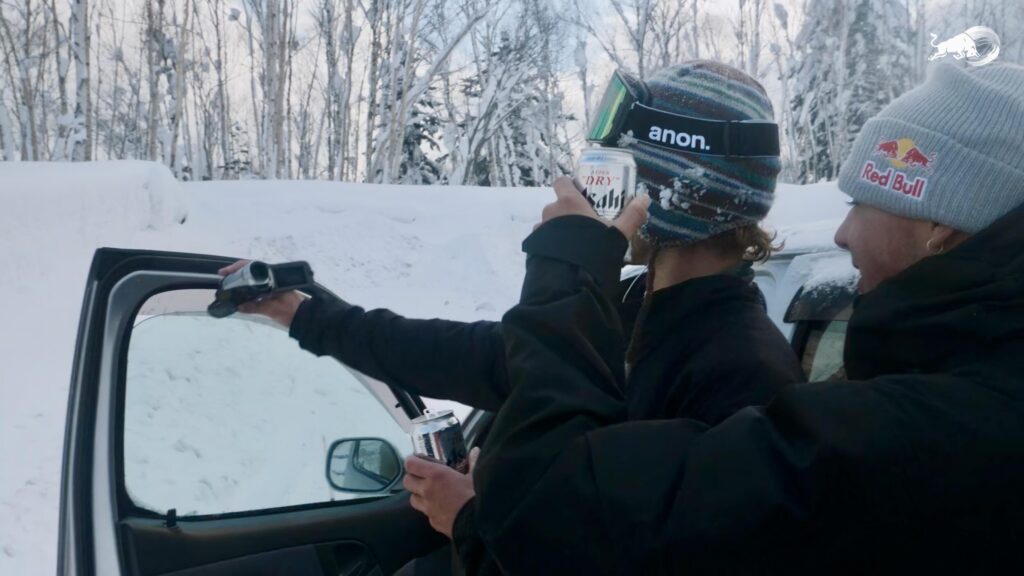
Beers by the car after filming in this scene from Saisho. Image: Red Bull Media House
Japan takes it seriously. The practical rule is simple. If you drink, do not drive.
Here is the part that catches visitors out. In Japan, the law does not stop with the driver. You can be charged for lending a car to someone who has been drinking, for serving them alcohol, or even for riding along as a passenger.
A passenger in a car driven by a drunk driver can face up to three years in prison or a ¥500,000 fine.
For the driver, the law separates more serious drunk driving from alcohol-influenced driving. Depending on the circumstances, a driver can face up to five years in prison or a ¥1,000,000 fine. The lower alcohol-influenced category carries up to three years or a ¥500,000 fine. (Source: National Police Agency)
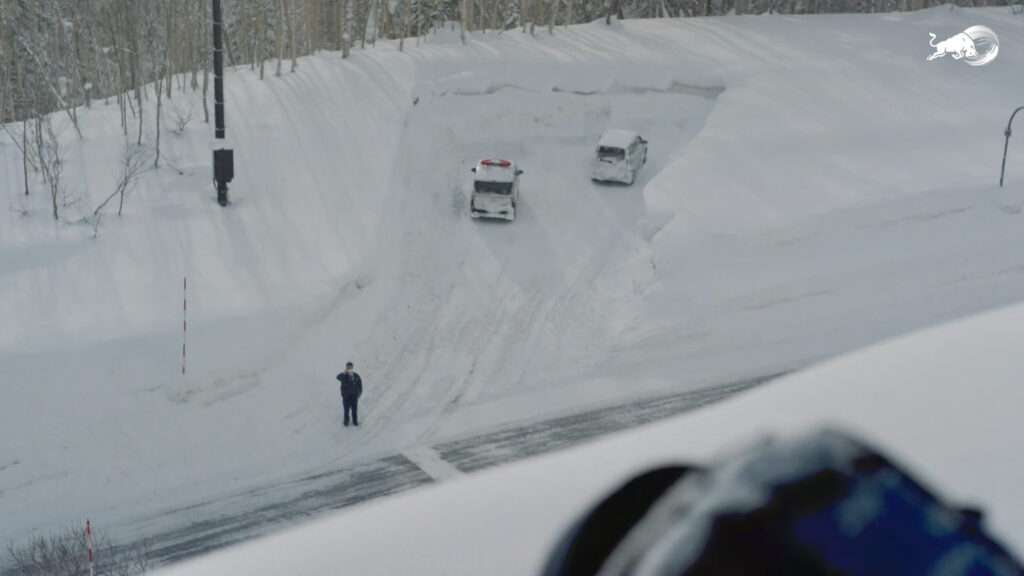
Police warnings stopped filming. Still from Saisho. Image: Red Bull Media House
The easy fix is to leave the car where it is. Take a taxi, stay nearby, or use a daiko service. With a daiko service, one driver takes you home while another drives your car. If it is a rental vehicle, check the rental company’s terms before handing the keys to anyone else.
Infrastructure is not a park feature
Another sequence in Saisho shows the athletes skiing on snow-covered avalanche barriers. Under heavy snowfall, they become the picture-perfect powder pillows seen in ski and snowboard film shot in Japan. But they exist to protect roads and communities. They are not terrain park features.
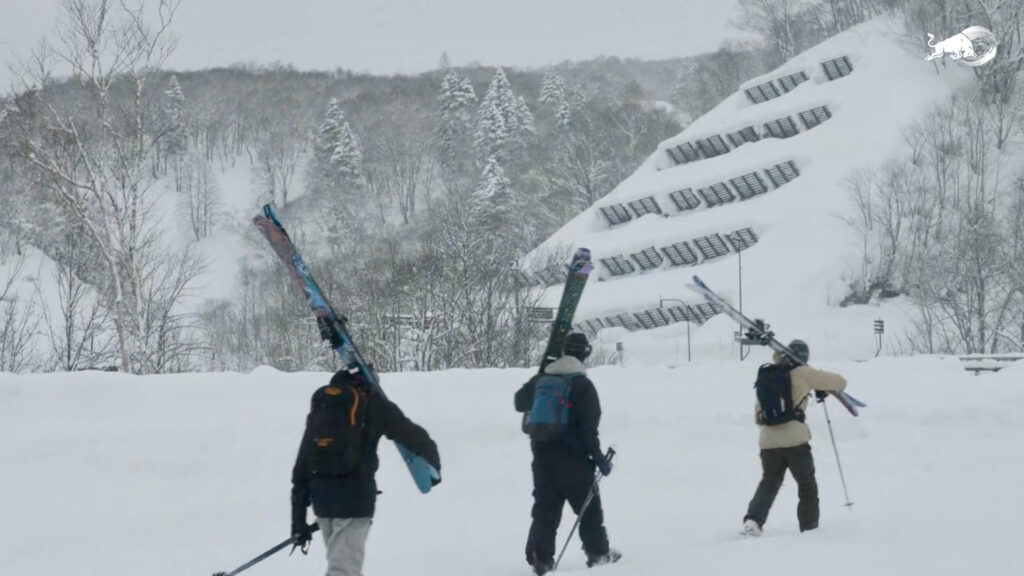
Athletes walk towards a hillside of avalanche barriers in Saisho. Image: Red Bull Media House
Do not climb, jump, or ride avalanche barriers without permission.
The legal severity depends on the location and circumstances. Entering a restricted area without permission, ignoring instructions to leave, or knowingly damaging property can be against the law. Deliberate damage to another person’s property can carry up to three years in prison or a ¥300,000 fine under the Penal Code. (Source: Japan’s Penal Code)
Roadside parking brings another risk. A car parked on the side of the road can block snow clearing operations, emergency vehicles, and local traffic. For a regular car, the penalties can range from ¥10,000 to ¥12,000 for prohibited parking. Other penalties can rise to ¥15,000 or ¥18,000. The exact amount depends on the location, signage, and circumstances. (Source: Metropolitan Police Department)
Towns are not urban parks
Saisho also features a rail sequence in front of a small Japanese shrine. Japan’s towns and villages are full of interesting places to explore. These small towns are communities and many of these places carry cultural significance.
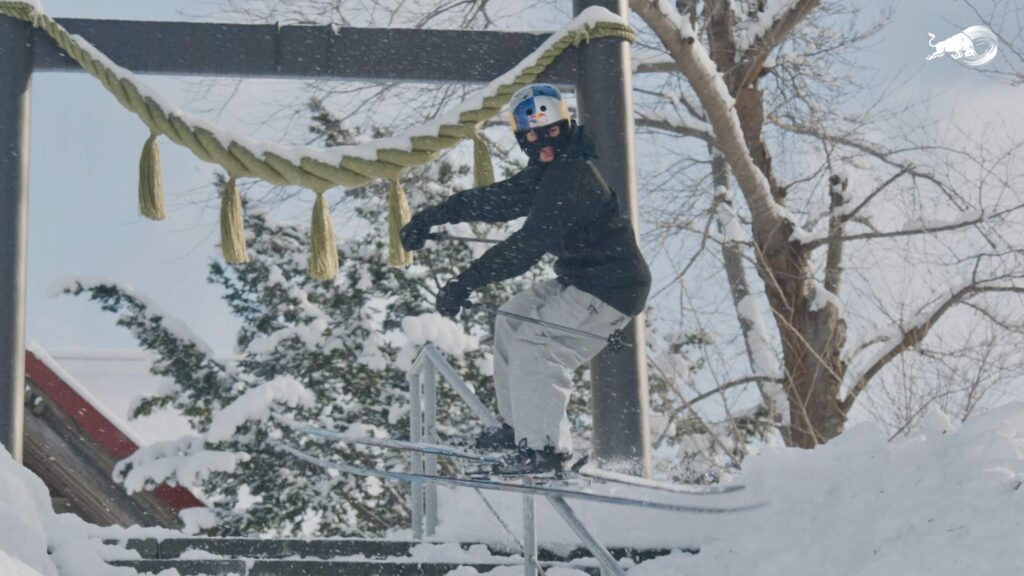
A rail sequence at a shrine gate in Saisho. Image: Red Bull Media House
Shrines and temples can be places of worship, private property, protected heritage, or all three. So respect signs, boundaries, and use common sense. Do not enter closed areas. Do not use a cultural site as a feature without permission.
Damage to property can be prosecuted under the Penal Code. If a site is protected as an Important Cultural Property or designated historic site, the penalty is higher. It can reach five years in prison or a ¥1,000,000 fine. (Source: Cultural Properties Protection Act)
Legal status varies from site to site. That is another good reason to keep skis and snowboards away from heritage structures.
Off-piste done properly
Deep powder and open backcountry terrain are a big part of what makes Saisho and other films shot in Japan so compelling. Finding fresh snow beyond resort boundaries can be the highlight of a trip. But I continue to bang the drum on sensible off-piste safety. Understanding local access rules, closures, and mountain safety is part of doing it right, and it keeps the day memorable for all the best reasons.
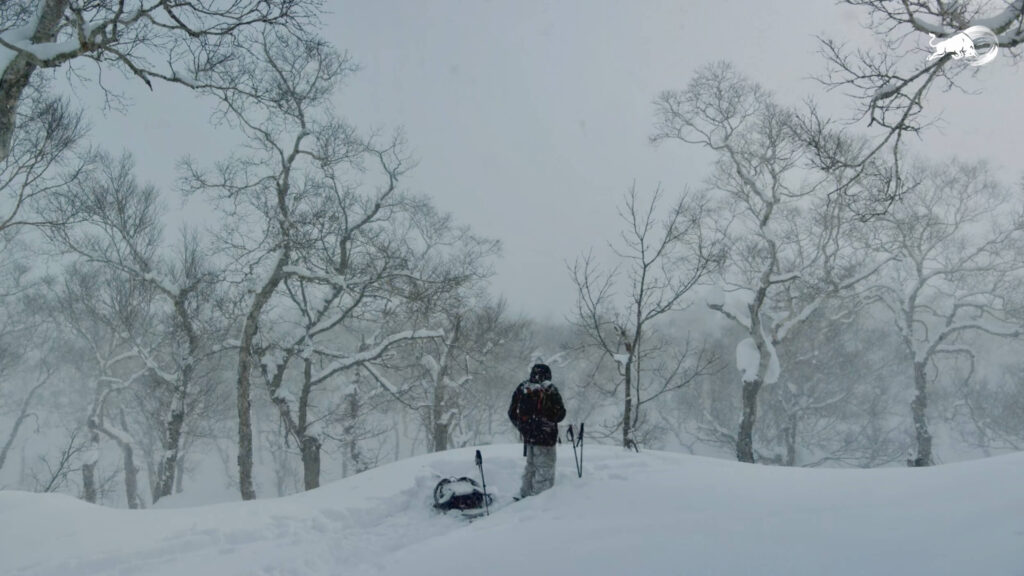
Saisho captures the deep snow during a snowfall in a birch forest. Image: Red Bull Media House
Niseko offers a useful model. Its rules allow riders to ski outside resort boundaries as long as they use designated open gates, stay out of closed and prohibited areas, and follow ski-patrol instructions. (Source: Niseko United)
Break those rules and the consequences are published in advance. Lift passes may be confiscated and not reissued. And the rescue helicopter is not free. In Niseko, a rescue from the backcountry starts around ¥100,000.
Elsewhere in Japan, the details change. In Nagano, a mountain plan is required when using designated climbing trails. That obligation does not automatically apply to every backcountry route. Even where a plan is not legally required, it’s always good to leave one with a trusted person. It gives rescuers a starting point if something goes wrong. (Source: Nagano Prefecture)
Rescue costs vary too. Police and fire rescue is generally publicly funded. But resort patrols, private teams, guides, huts, and helicopters for emergency situations can get expensive fast.
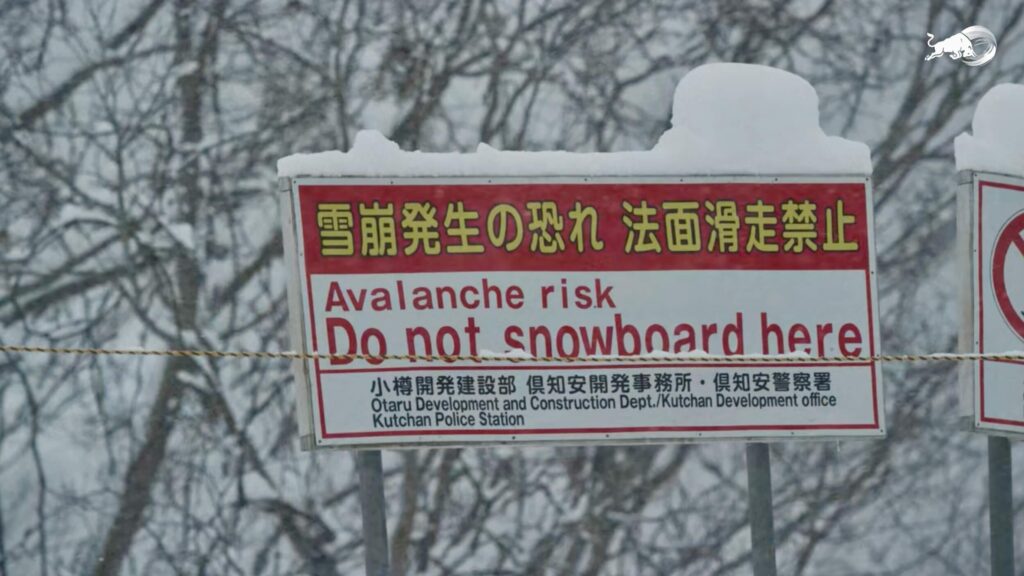
An avalanche warning sign to mark a closure in Saisho. Image: Red Bull Media House
Before you leave the resort boundaries, read your travel or sports insurance carefully. A standard policy may not include off-piste or backcountry activities unless specific coverage has been added.
The short version
Japan remains one of the world’s great places to ski powder. Getting the most from Japan does not mean ducking ropes or jumping off snow-covered barriers. Japan is a country rich with traditions waiting to be experienced. You are a guest in another country, so remembering a few basic rules goes a long way.
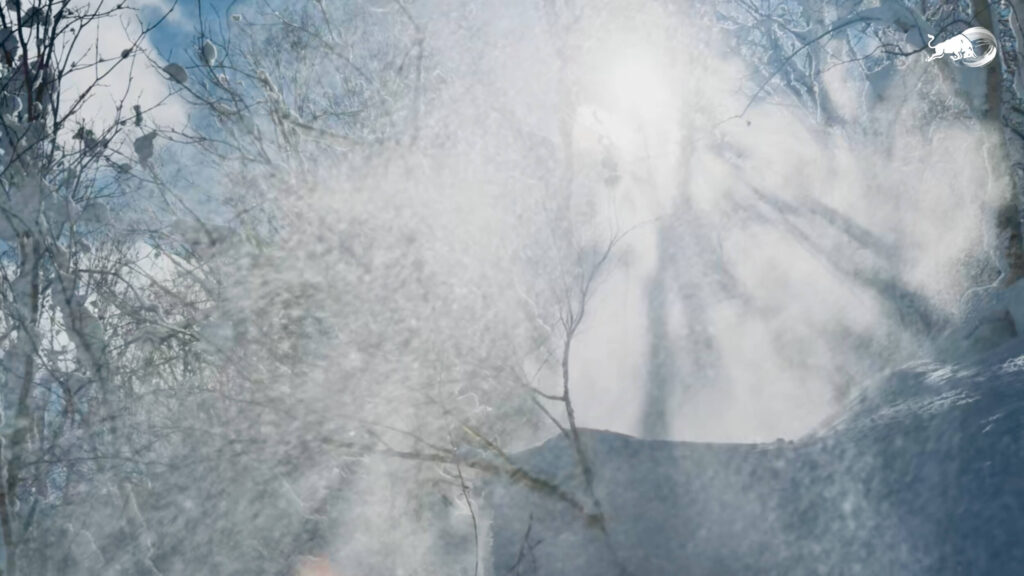
Leftover powder spray from Saisho’s athletes in a snow-covered forest. Image: Red Bull Media House
On the mountain:
- Use open gates (if available).
- Read the avalanche information.
- Carry the right equipment.
- Respect closures.
Off the snow:
- Do not drive after drinking alcohol.
- Park only where permitted.
- Respect private property, shrines, and local signage.
These are simple considerations but add up to make a real difference. They protect access, safety, and goodwill with locals, so that we can all experience what Japan has to offer in the future.

Poster art for Red Bull’s Saisho. Image: Red Bull Media House
Haven’t seen Saisho yet? You can watch the 23-minute film on Red Bull TV for free! It follows freestyle skiers Miguel and Nico Porteous and Felix Klein on their first trip to Japan.
PARTNER WITH SKI ASIA
 Put your business in front of half a million real skiers
Leverage Ski Asia’s audience of more than half a million skiers globally to drive more traffic and demand to your winter season business.