


If you’ve visited Japan, chances are you’ve dreamt about buying a property here. Most of us have sat in a bar after a big powder day and talked about how cheap it is to buy near the mountains. It might seem like the perfect plan, but the reality is the purchase price is often only the beginning, and can be nearly impossible to navigate without professional help. By the time renovations, utilities, and approvals are complete, the total investment can be much higher than the original price.
Why? High material costs, severe labour shortages, and complex local construction codes mean that fixing up a house in places like Hakuba, Myoko, or Niseko requires deep pockets and plenty of patience to navigate Japan’s regulatory processes.
There is, though, an elegant way to get around these problems: luxury, hand-built tiny homes, built on a trailer base. This gives those who are looking to move to Japan a path to property ownership that completely bypasses traditional development bottlenecks. It also allows local landowners and hotel operators to expand and upgrade their offering or add staff housing simply by adding prefabricated units to their land, which can then be expanded further at a later date.
At the forefront of the tiny home revolution in Japan is Ikigai Collective, a specialised design and construction firm operating out of a purpose-built, hangar-sized factory in Iiyama, Nagano, just outside Nozawa Onsen Snow Resort. Founded by Mitchel van der Werf, an expert carpenter with fifteen years of hands-on building experience spanning Australia, Canada, the USA, and Japan, the company builds high-end tiny homes engineered specifically for Japan’s heavy-snow regions.
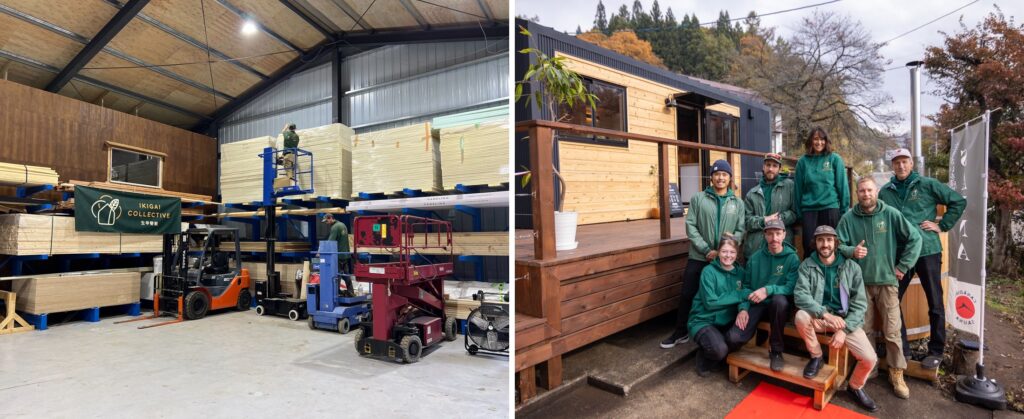
Ikigai’s factory and team. Image: ikigaico.jp
Try-Before-You-Buy
The tiny homes at Ikigai’s showroom village operate as regular accommodation (which you can book on Booking.com), but the real purpose of the showroom village is for potential buyers to see what it’s like to stay in Ikigai’s range of high-end tiny homes.
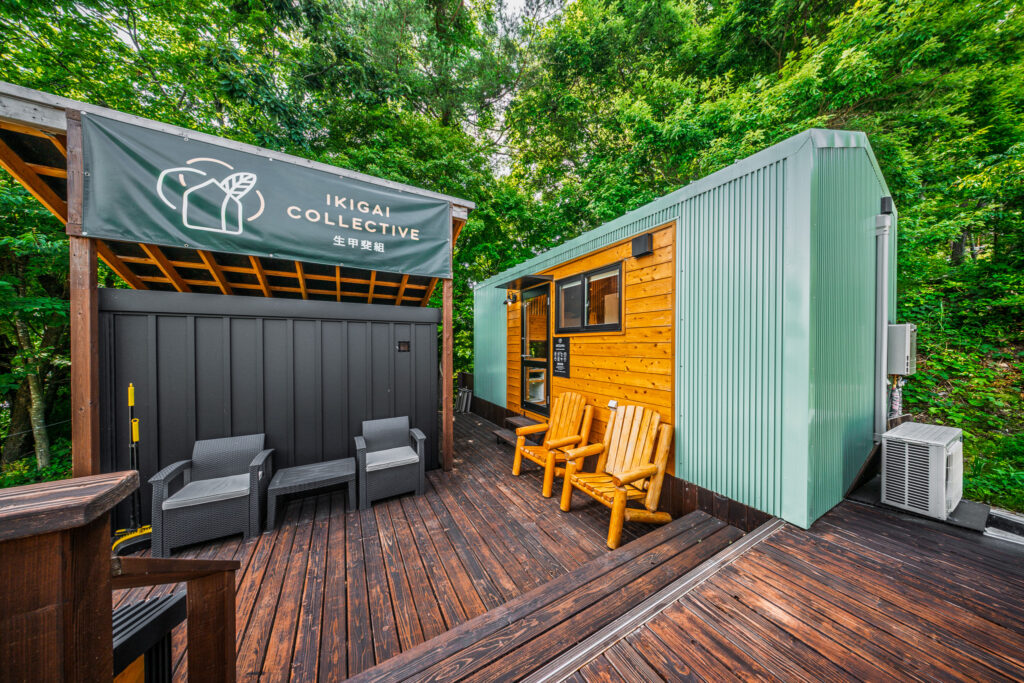
The deck and sauna at Ikigai Collective’s showroom village. Image: ikigaico.jp
It’s difficult to commit to a tiny home or a business expansion without knowing how the space actually feels to stay in. To bridge this gap, Ikigai has flipped the traditional sales model on its head by turning its accommodation business into an active product showroom.
Guests can choose between the Nozawa (19.4 m2), which has a mezzanine layout, and the Mizuho (15.8 m2), which has a full-height sleeping area on one level. This “try before you buy” framework allows you to evaluate the flow of the rooms, test the heating recovery times, and experience the space firsthand before making an investment.
The Guest Experience
Can these structures really handle the cold of a Japanese winter and cope with the ridiculous amount of gear that two people need on a snowboarding trip? To find out, I recently stayed at Ikigai’s showroom village base near Nozawa Onsen, tucked away in the snow-sure landscape of Iiyama, which sees an incredible 14 metres of annual snowfall.
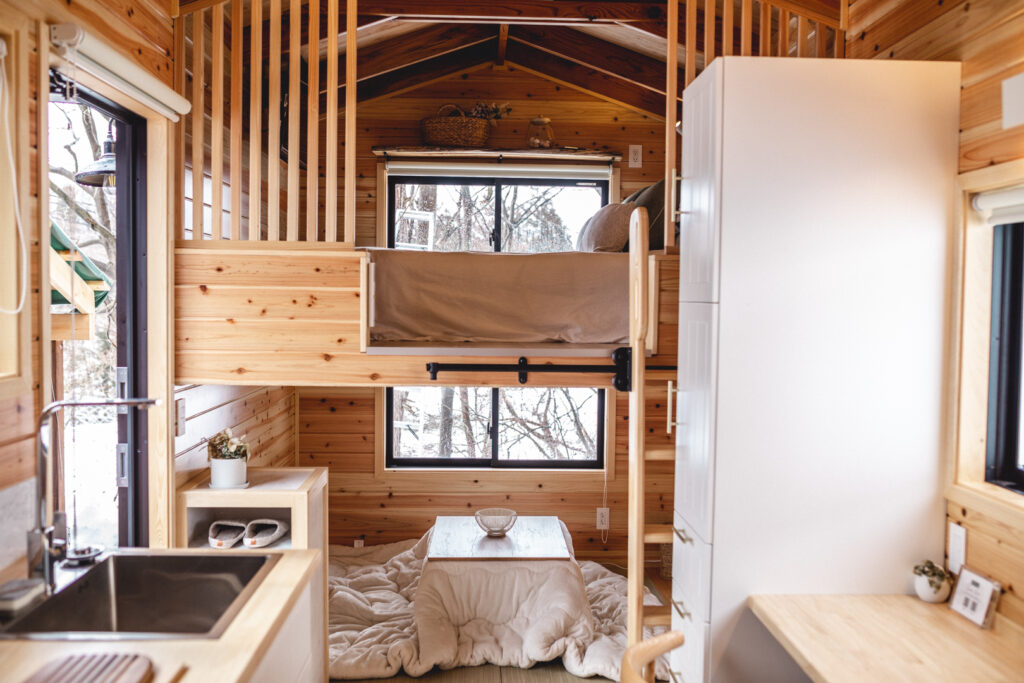
The interior of Ikigai’s Nozawa model tiny home. Image: ikigaico.jp
The showroom village is perched on a piece of land close to a junction on the main road, an eight-minute drive from the Nozawa Onsen resort, and well positioned to access other local ski hills.
On arrival, you can immediately see that these units aren’t low-quality trailers or container-home conversions. The finishing is high-end, the units are very sturdy, and they have a typically Japanese minimalist and functional aesthetic. We stayed in the Nozawa unit.
Surprisingly, inside you’ll find a fully self-contained home with a kitchen-diner, a full-size fridge, microwave and hob, a shower room, toilet, living area and bedroom, all within a 6m x 2.4m footprint. Far more than you get in many hotels in Japan.
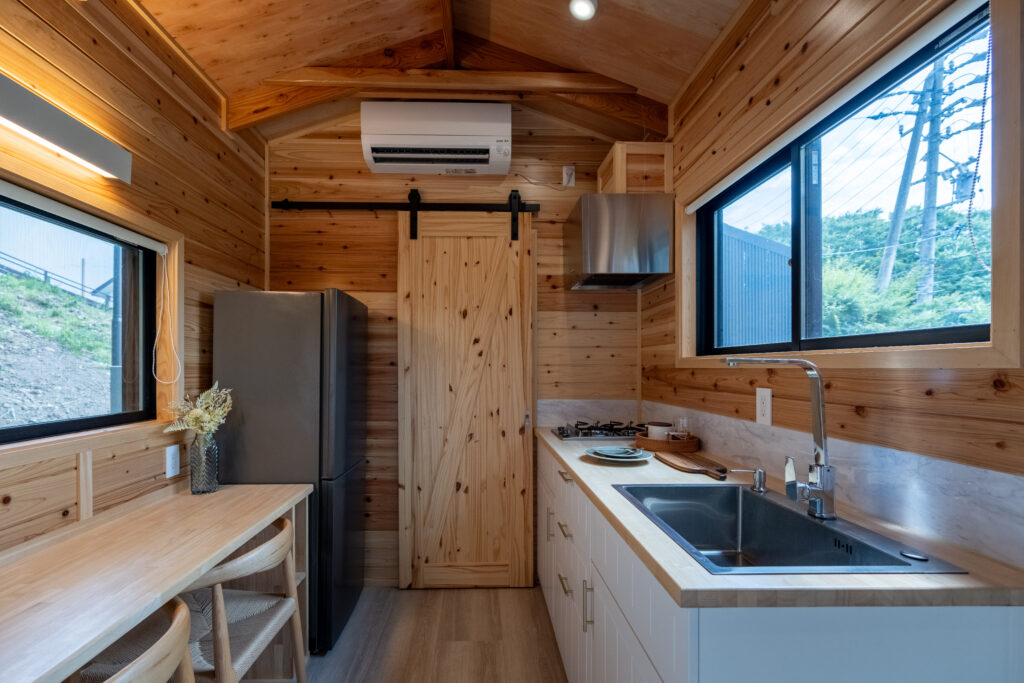
The kitchen has a full-size fridge-freezer, a hob and plenty on workspace. Image: ikigaico.jp
Of course, space is tight, but it feels cosy and well laid-out. Opposite the kitchen, the bedroom and living area are stacked on top of each other, with the bedroom accessed by a ladder. There’s enough space to sit on the large double bed, again bigger than most doubles you’ll find in Japanese ski resorts.
The living area is a toasty, warm hideaway with a low table that has an integrated blanket and under-table heater. Good for warming up in the evening.
There is enough space to open one suitcase next to the table, and store another one upright under the ladder. There are also various cubby holes and shelves for tucking away your gear.
The heating is a reverse-cycle air conditioner that warms up the small, well-insulated space very quickly. The shower is full-size and has good pressure like a normal shower. It isn’t like a campervan shower.
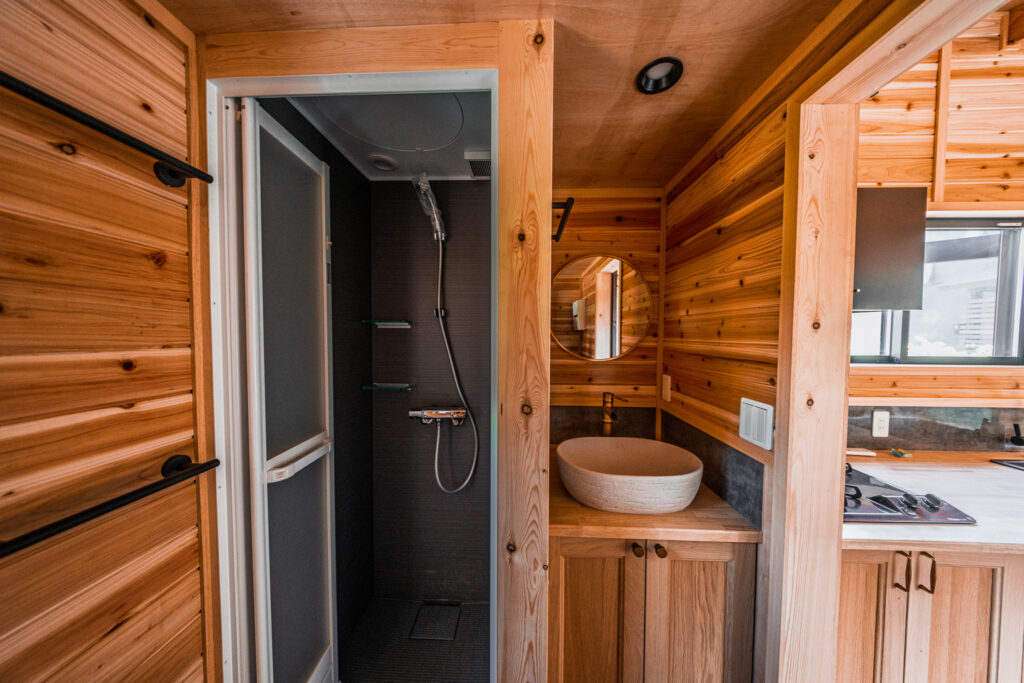
Units can be built with different configurations for the shower rooms and sleeping areas. Image: ikigaico.jp
This kind of tiny home works very well for a ski trip in Japan because, ideally, you’ll spend very little time in your room. You just need enough space to get ready in the morning and somewhere warm to sleep. You’re either on the mountain or out having dinner when you aren’t sleeping.
Also, many Japanese ski resorts actually have great changing facilities, so you can just bring your gear to the resort and get ready there if you need more space.
We didn’t feel exposed to the elements or cold at any time. The combination of high-R-value closed-cell insulation, double-glazed windows, and powerful heating creates a space that feels warmer and more air-tight than many traditional Japanese lodges I’ve stayed in over the years.
The village also has a sauna and a cold plunge bath, which enhance the mini-village resort feel and show how developments can offer spaces and facilities in addition to the tiny homes. There’s also a drying room for your equipment, which helps to declutter the living space.
We really enjoyed our stay in the tiny home, and it felt like a big step down in quality when we moved on to other, more expensive, but worn-out and draughty accommodation in Nozawa Onsen village.
Built for Japan’s Unique Problems
A major problem with the global tiny home trend is that many mass-produced models are built for mild climates. They rot in high humidity, leak during heavy rainstorms, and buckle under heavy snow loads. Ikigai does not aim to compete at the cheap, DIY end of the market. The company engineers every chassis and frame from scratch by hand using locally milled Japanese Sugi. They don’t repurpose old shipping containers or use cheap premade parts from China.
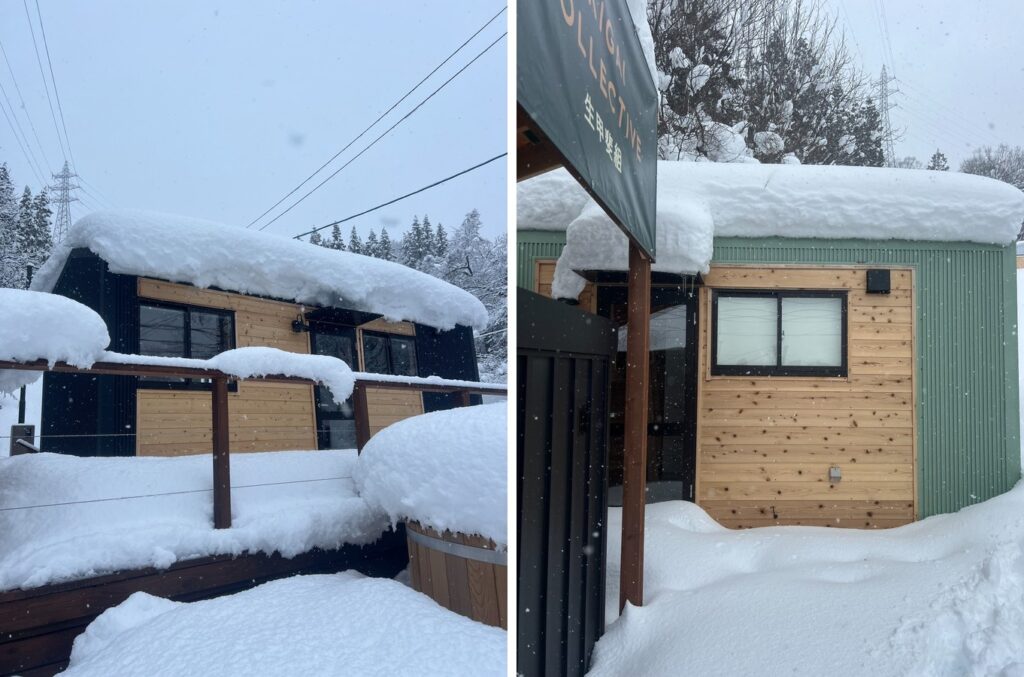
Tiny homes built for the Japanese winter. Image: ikigaico.jp
The units feature robust weatherproofing, advanced vapor and moisture barriers to eliminate mold, and heavy-duty structural insulation designed to keep energy bills low during winter. The roofs are specifically engineered to hold a massive 2-metre static snow load before requiring manual clearing. Every structural joint is reinforced for genuine long-term durability. It is an intentional, high-spec build designed for decades of rigorous rental use.
Chronic staff housing shortages, skyrocketing building costs, and rapid tourism surges are currently forcing resort businesses and lodge owners across Japan to rethink how they scale their operations. Nozawa Onsen itself is tightly constrained. The village has virtually no physical space left to build more accommodation.
Ikigai’s tiny homes, built on a trailer base, provide an elegant, scalable route for expansion. A lodge owner needing immediate staff housing before next December can drop an accommodation unit onto an unutilised parking plot in weeks.
Similarly, landowners can activate small parcels of empty land incrementally. You can start with one or two high-end guest units to generate cash flow, and scale up into a full village layout over time as the business expands. Because the units are delivered fully assembled and ready for immediate toolless utility connection, the installation process can be completed in a matter of weeks.
Why Put a Tiny Home on a Trailer?
Japan’s development and land ownership laws are strict and difficult for foreigners to navigate. Using a trailer base makes everything easier.
Landowners can activate underutilised land without immediately committing to permanent construction. Resort businesses can quickly add guest accommodation or staff housing, then expand their offering over time as demand grows. Because the units remain transportable, they retain the flexibility to relocate or repurpose them as their operational needs change. And because these transportable units are legally classified as vehicles rather than buildings, businesses can also benefit from an accelerated four-year depreciation schedule, making them an attractive investment for business owners.
To maintain a strict legal classification as a vehicle rather than a permanent building, Japan’s trailer house laws require that every connection, including gas, plumbing, and electricity, must be completely toolless. They are custom-engineered to be disconnected entirely by hand, allowing the structure to remain fully mobile.
Ikigai’s tiny homes do seem like the perfect response to Japan’s unique problems. Demand for accommodation in ski villages is at an all-time high, yet traditional construction is simply too slow and expensive to respond. Japan’s infamous fax-machine-based administrative culture can stall a standard build indefinitely. Ikigai operates a full A-to-Z service, managing local town council negotiations, site clearing, old Akiya tear-downs, plumbing layouts, and electrical pole placements to make things as easy as possible for their clients. This isn’t just an off-the-shelf tiny home, it’s a complete end-to-end service.
Whether you are an investor seeking an alternative route into Japan’s real estate market, a resort operator tackling an accommodation crisis, or a skier wanting a private base in the mountains, it would be a mistake not to spend a night at Ikigai’s showroom village and give yourself the chance to fall in love with their tiny homes.
For more information, go to: ikigaico.jp