


Niseko United is unlike any other ski resort in Japan. It isn’t just more of the same but bigger or with better snow. It feels completely different.
I’ve been lucky enough to visit more than 60 of Japan’s biggest and best ski resorts and nowhere else comes close to Niseko for scale, convenience, modern facilities, off-mountain activities and sheer variety of terrain.
There’s also nowhere else in the country with four distinct yet interconnected foreigner-friendly international-standard ski resorts, each with its own village, side by side on a single mountain. Niseko United has more than 60 runs, 29 lifts including six gondolas, a vast backcountry, an enormous range of dining both on and off the mountain, ultra-luxury hotels, bars, nightclubs, food trucks, a multitude of retail and rental options – and probably the most reliable snowfall in the country.
All that said, it’s also now at the point where it can be a bit of a grind during peak season. The roads get hectic, the lift lines are chaos in the morning, powder days are carnage, and even “budget” accommodation is stupidly expensive. Locals have been priced out and getting a restaurant reservation at short notice is almost impossible.
All of this might be par for the course if you’re used to the resorts in Colorado or Lake Tahoe, but in Japan, it isn’t normal. A handful of other resorts here suffer from similar problems, but not to the same extent. Hakuba has its issues, but it’s so massive and spread out that you can still find cheap and quiet places in the valley. Many resorts in Japan see crowds during holidays and on Saturday mornings, but in general, long lift lines aren’t very common in Japan.
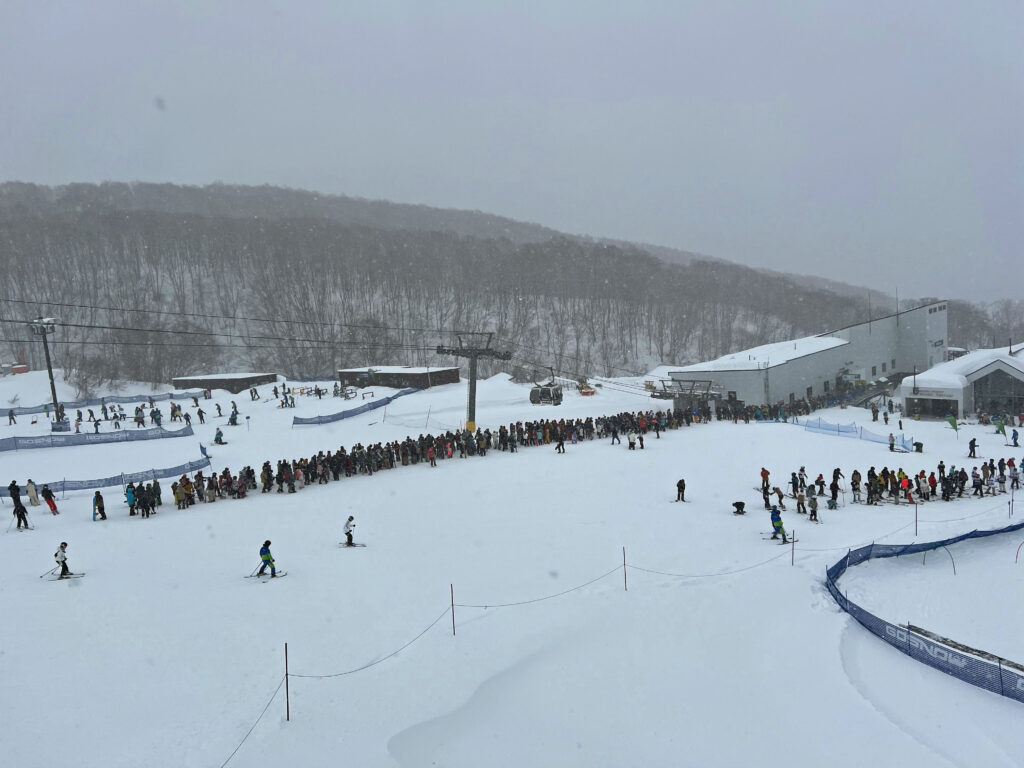
The Hirafu Gondola at 9:30 am on a Thursday morning in February. Image: Jamie O’Brien
Just two or three years ago, almost everyone on Reddit and social media discussing a big trip to Japan wanted to go to Niseko more than anywhere else. Now I regularly see people who’ve never been to Japan saying they want to avoid it because of the mythical crowds.
Is it really true that Japan’s most famous ski resort is now best avoided?
No, not at all. It’s about timing. The problem is that everyone wants to go at exactly the same time, stay in the same area and eat and drink at the same places.
Japan’s snow season is short, and the stretch when it snows almost non-stop (roughly mid-January to late February) is even shorter. It also overlaps with the Australian school holidays, which run until the end of January.
But if you’re inexperienced, or a total beginner, going to Niseko during that window is a mistake, and an easy one to make. Google or ask AI “What’s the best time to visit Niseko?” and you’ll get told mid-January to February, but that answer is missing some important context. If you want super-deep powder, that period is unquestionably the best time to go. If you’re a beginner, or you’ve never experienced thigh-deep snow before, it absolutely isn’t. The weather at that time can be brutal.
Learning to ski or ride when it’s -2C and sunny is a completely different experience to when it’s howling and -20C, and if you’ve never ventured off-piste, it’s infinitely easier, less painful and frustrating to learn in 5cm of fresh snow than in 30cm. At the peak of winter, it’s completely normal to see the slopes empty out by early afternoon because everyone’s had enough of the cold, the bumpy pistes and steamed-up goggles. If you’re trying winter sports for the first time, you’ll have a lot more fun doing it in March when the sun is out.
That’s not to say that March is a barren month for snow. Niseko still averages around five snowy days a week and over 40cm of snow in the first week of the month. This might be significantly lower than the heaviest weeks in peak season, but it’s still a good amount of snow. To put it into context, early March in Niseko is roughly comparable to conditions in Vail or Courchevel during their best weeks in January and February.
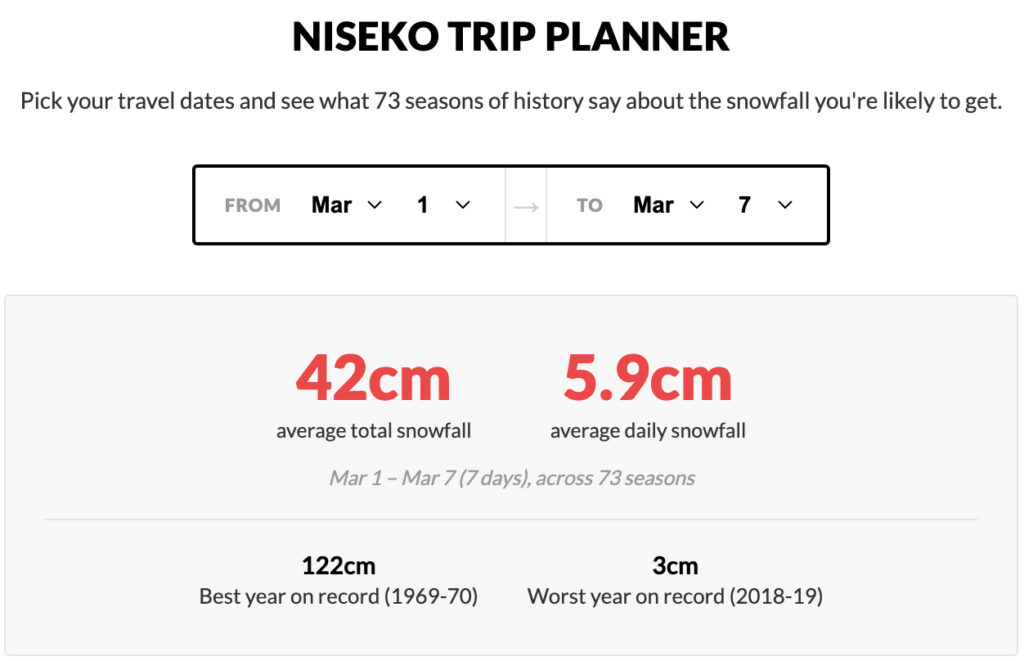
According to our newly launched Niseko trip planner, the first week of March is reliably snowy.
My advice is: if you’re looking for very deep powder and off-piste, stick to peak season, but consider renting a vehicle, basing yourself in Kutchan, and visiting some of the other nearby resorts and backcountry spots with a guide. If you’re a beginner or sticking to the piste, come to Niseko in spring or find another quieter place in peak season. You’ll have a much better time.
Lifts and terrain
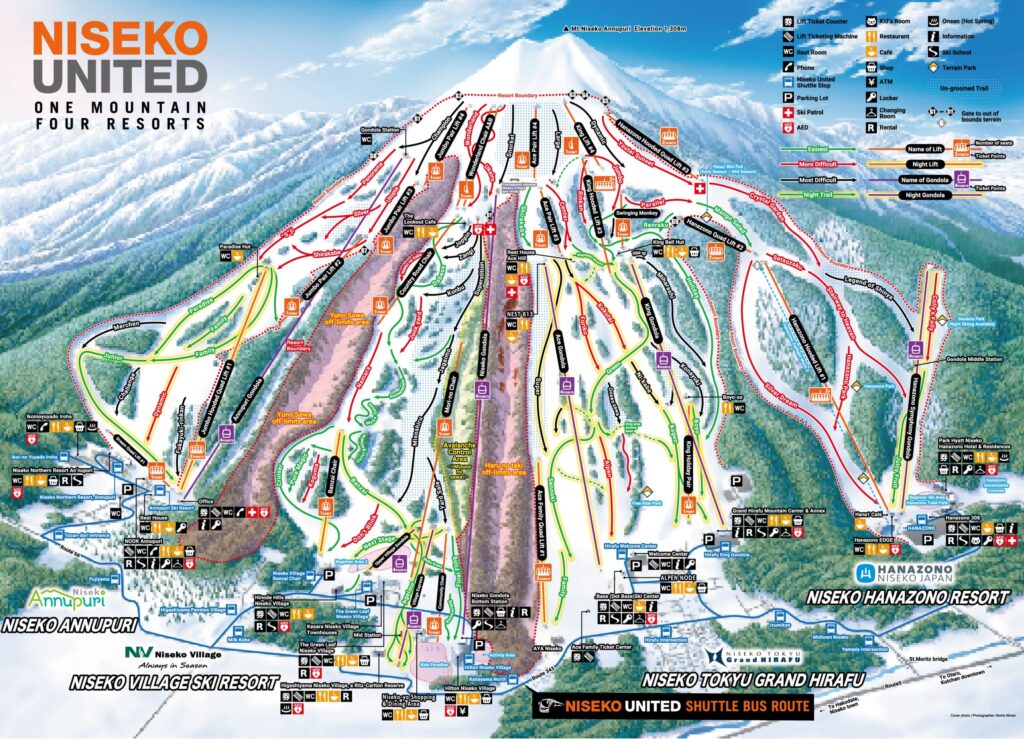
The Niseko United course map. Image: niseko.ne.jp
Niseko United is actually four separate ski resorts stitched together across the slopes of Mt Annupuri (1,308m): Annupuri, Niseko Village, Grand Hirafu and Hanazono, running roughly west to east. All four are linked by lift and piste, and a single all-mountain pass covers the lot, so in practice it feels and skis like one giant resort. (Although during those big winter storms in January and February, the top lifts close regularly and the only way to village hop is by road.)
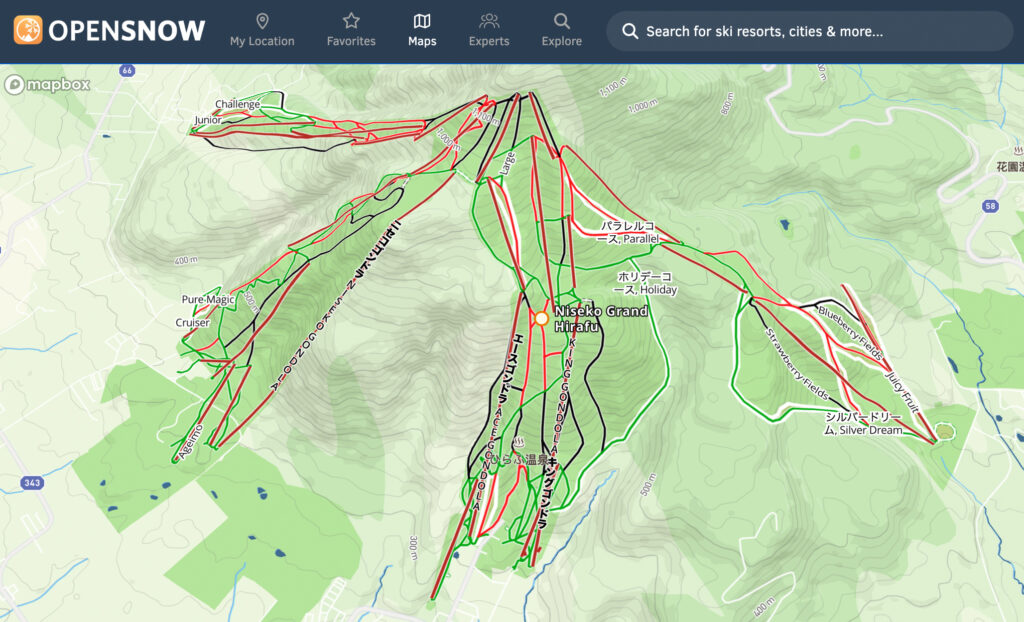
The four resorts and villages are actually more spread out with different aspects. Image opensnow.com
There are more than 60 courses, 29 lifts and six gondolas (only Shiga Kogen and Zao Onsen have a bigger lift count anywhere in Japan). Grand Hirafu has the largest share of the terrain and the busiest base village, with hotels, condos, shops and restaurants clustered right at the bottom of the slopes. Hirafu also got a recent upgrade: the old Ace Quad, running since the 1980s, was replaced in 2024 by the new 10-person Ace Gondola, complete with heated seats, Wi-Fi and a couple of glass-bottomed “lucky gondola” cabins, roughly doubling capacity on that side of the mountain, so Hirafu now runs two gondolas.
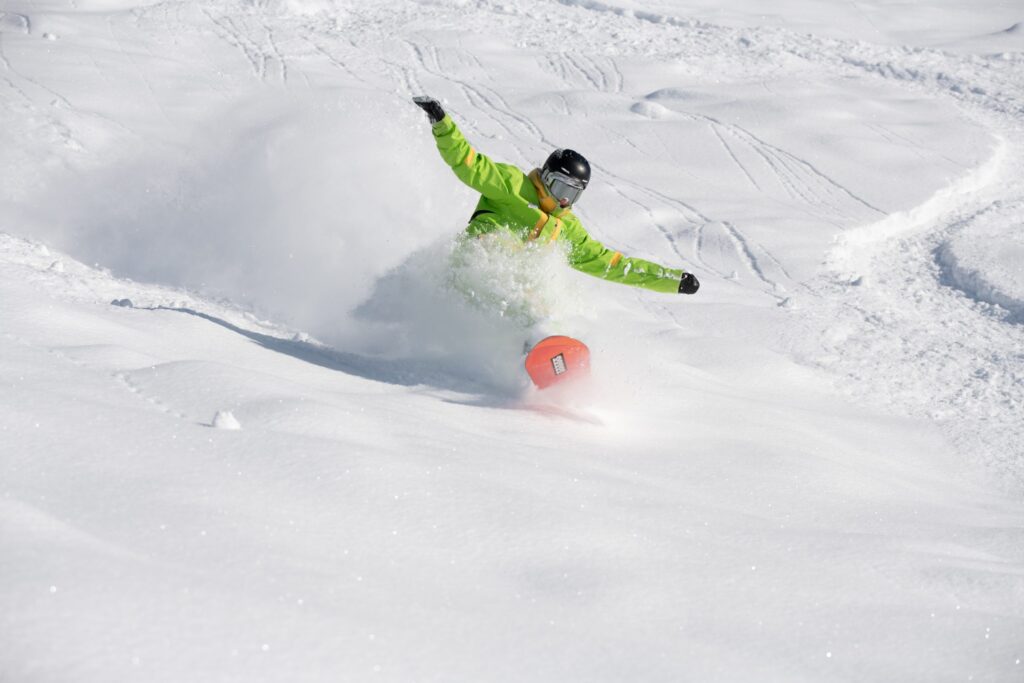
Fresh tracks at Niseko Village. Image: niseko-village.com
Niseko Village is where you’ll find some of the best off-piste and tree skiing on the mountain, with long, scenic courses cut through beautiful birch forest. It’s also mid-way through an infrastructure overhaul. A new eight-passenger gondola is replacing the ageing Mori-no Chair, which has run the same line for more than 40 years. It’s arriving in two stages, the first section, up to 670m, opens for the 2026/27 winter, with a second stage to around 930m following in 2027. The neighbouring Wonderland Chair is also being rebuilt as a double chair as part of the same project, with five older lifts retired in total, which should meaningfully cut queuing at what’s currently one of the more bottlenecked corners of the mountain.
Annupuri, the westernmost and generally quietest of the four, is next in line, its ageing gondola is set to be fully replaced ahead of the 2028/29 season, roughly doubling capacity. Until then it remains the best bet for fewer people, with wide, well-groomed runs and lovely views back towards Mt Yotei (if it’s clear).
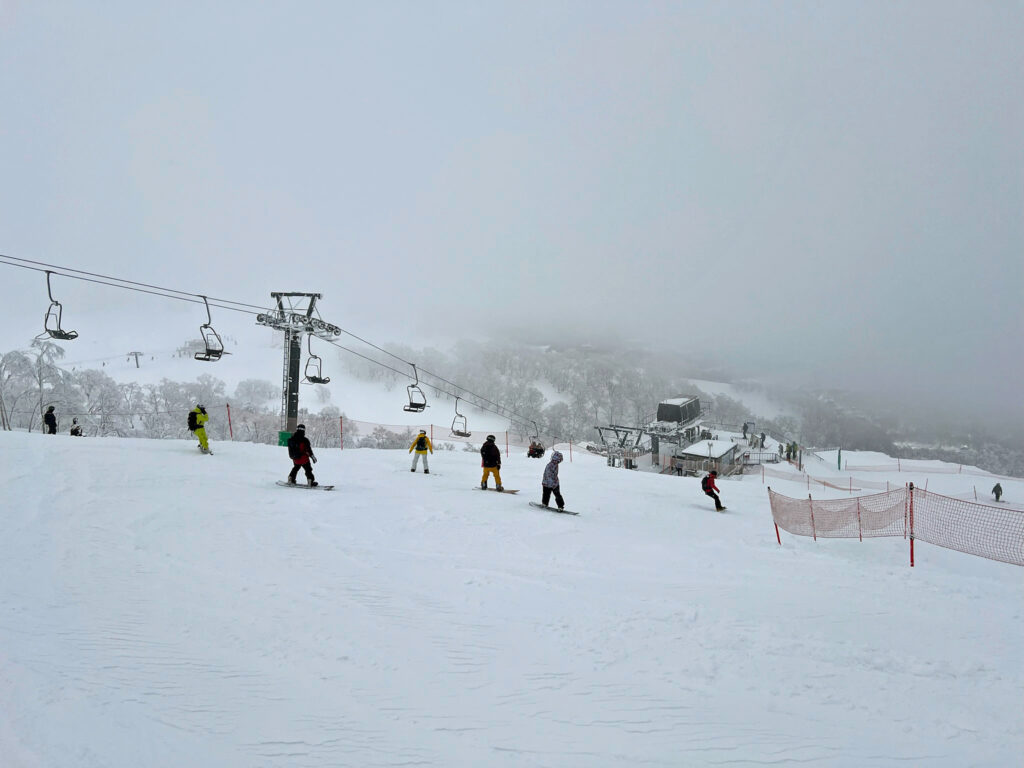
Jumbo Pair Lift and Champion course at the top of Niseko Annupuri. Image: Robin Watts.
Hanazono, on the eastern side, has terrain parks, a dedicated beginner learning area, great tree skiing, and a gondola connection to the neighbouring Weiss Mountain area.
Beginners will prefer Hanazono’s dedicated learning zone or on Annupuri’s mellow lower slopes. Intermediates get an absolute field day lapping the long groomers at Grand Hirafu and Niseko Village. For advanced riders, the gladed runs off Niseko Village and Hanazono, plus the marked backcountry gates are why people flock here. Just remember that on a big powder morning, it gets tracked out faster here than almost anywhere else in Japan.
Grand Hirafu also has, without doubt, the best night skiing in the country. Nearly all night skiing in Japan is one or two chairlifts servicing the flattest and safest green runs. Hirafu runs the gondola at night and has the full range of green, red and blacks fully illuminated. The other bases also have separate night-skiing areas.
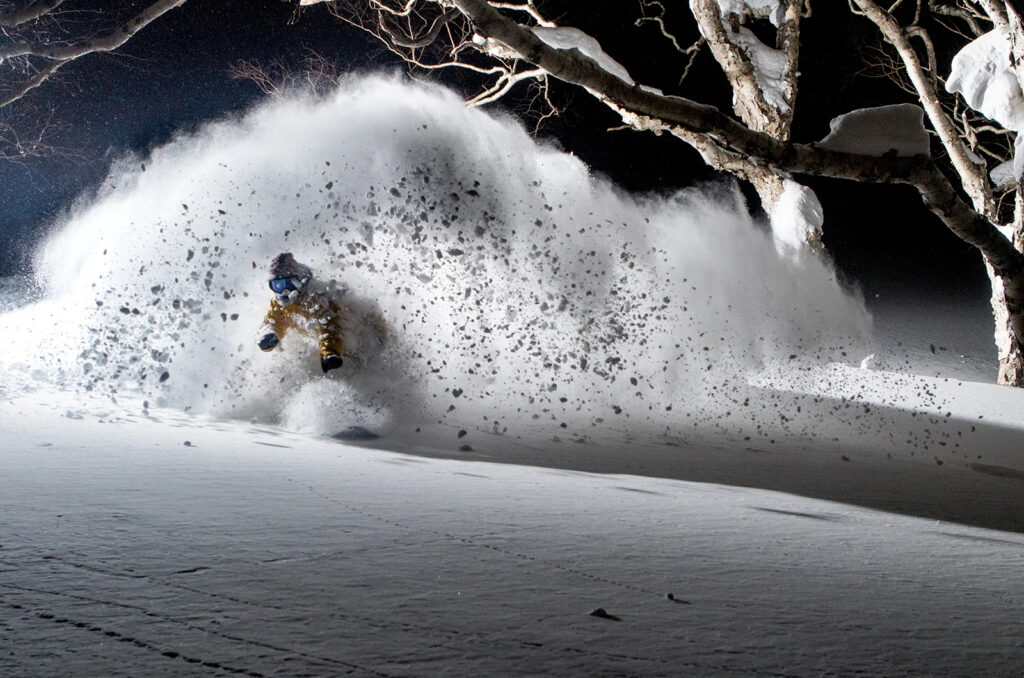
Night skiing at Niseko is not to be missed. Image: niseko.ne.jp
Snowfall
Niseko’s reputation for snow isn’t hype. Seasonal winds sweeping off the Eurasian continent pick up moisture over the relatively warm Sea of Japan, and by the time it reaches Niseko it falls as some of the driest, lightest powder on the planet, averaging around 14 metres a season.
From mid-December through to early March, it pretty much snows six days a week. The heaviest snow is in that sweet spot of mid-January to late February. This is fantastic if you’re chasing deep powder and know what you’re doing, but less fun if you’re a beginner standing at the top of a run in a whiteout.
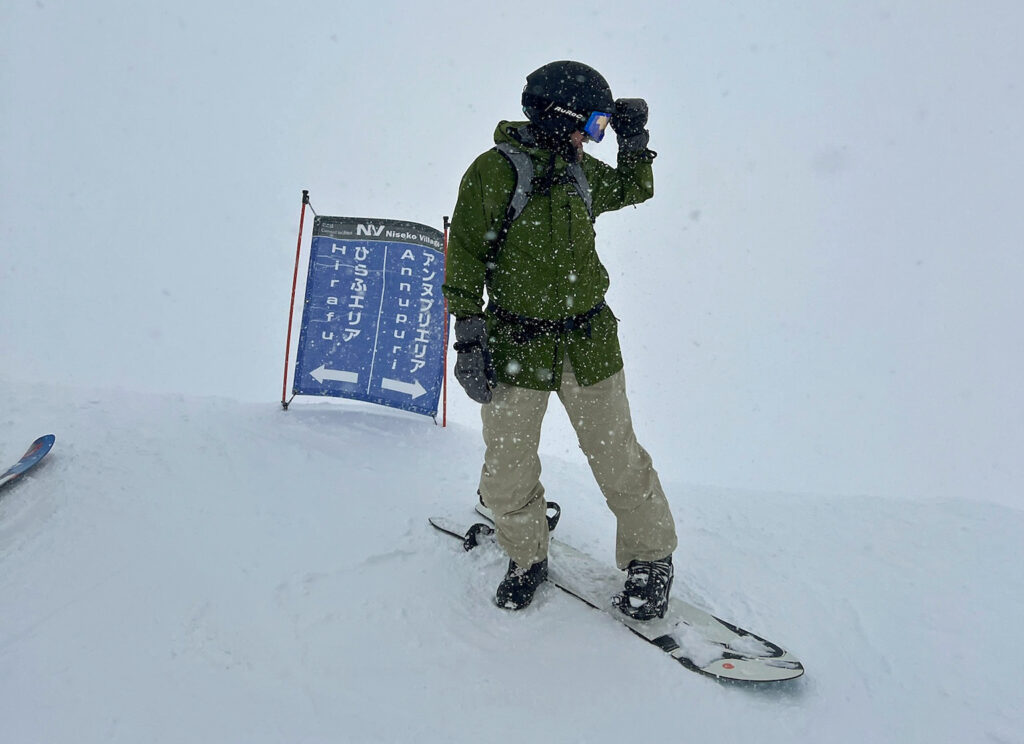
It can be hard to see in a whiteout. Image: Robin Watts.
Anytime outside of Jan-Feb, Niseko (and, more generally, the northern part of west Hokkaido) is usually the best place to be for snow in Japan. This also holds for warm seasons like the potential upcoming super El Niño for the 2026-27 season. In fact, while the rest of Japan can see a significant drop-off in snowfall during an El Niño event, it normally has very little effect in this corner of Japan.
According to our Niseko Trip Planner, during the last super El Niño in 2015-2016, the nearby weather station (in Kutchan) recorded 99cm of snowfall in the first 12 days of March (more than any other year since then for the same period).
Accommodation and Resort Services
ACCOMMODATION
Niseko has everything from high-end ski-in/ski-out chalets and condo-hotels to five-star resort hotels and simple lodging. Upper and Middle Hirafu have the highest concentration, including ski-in/ski-out properties The Vale Niseko, The Maples Niseko, and Niseko Kyo. Niseko Village is dominated by its two Hilton hotels, the Hilton Niseko Village and the Green Leaf, both with direct slope access. Hanazono and Annupuri have smaller, quieter clusters if you’d rather be away from the main nightlife strip. If you’re planning a trip to Niseko, book very, very early.
Budget is the sticking point in peak season, when even run-down, basic hotels are expensive. If cost is a concern, basing yourself in nearby Kutchan and driving or busing in each day is a solid workaround, with far cheaper food, supermarkets and accommodation than you’ll find in resort. You also find convenience stores, 100 yen shops and cheap winter clothing outlets.
You’ll also find that while resort hotels can be sold out 8 months before the start of the season, places like Stay Living Niseko in Kutchan haven’t even opened their inventory for bookings yet.
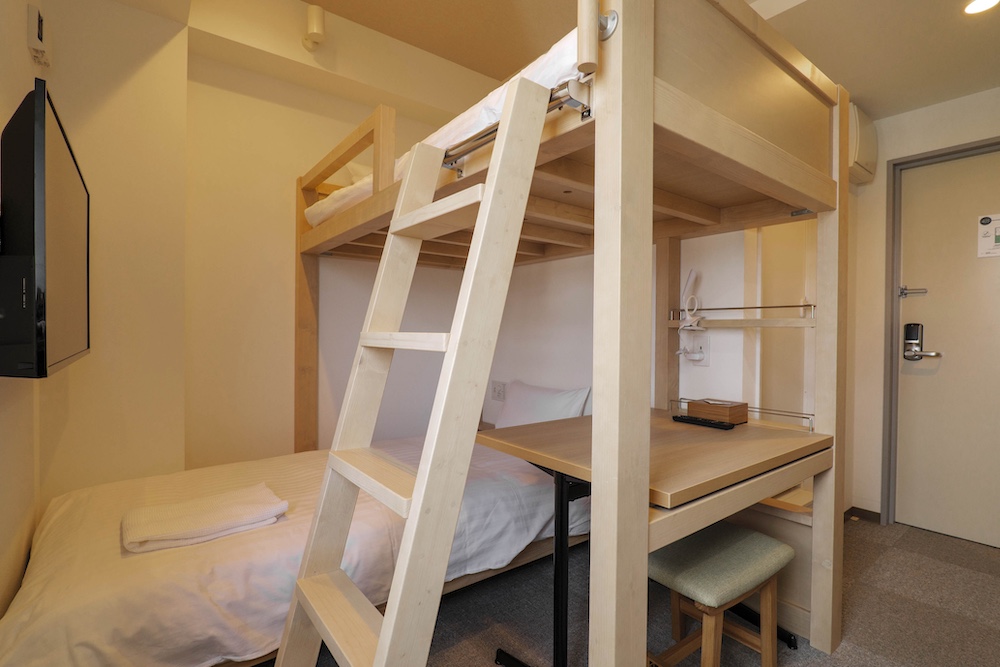
The twin rooms at Stay Living Niseko, Kutchan. Image: stay-niseko.com
The compact but functional rooms were just ¥20250 yen (180 AUD/125 USD) per night in 2026. These are great for one person and have a small kitchen and an ensuite bathroom.
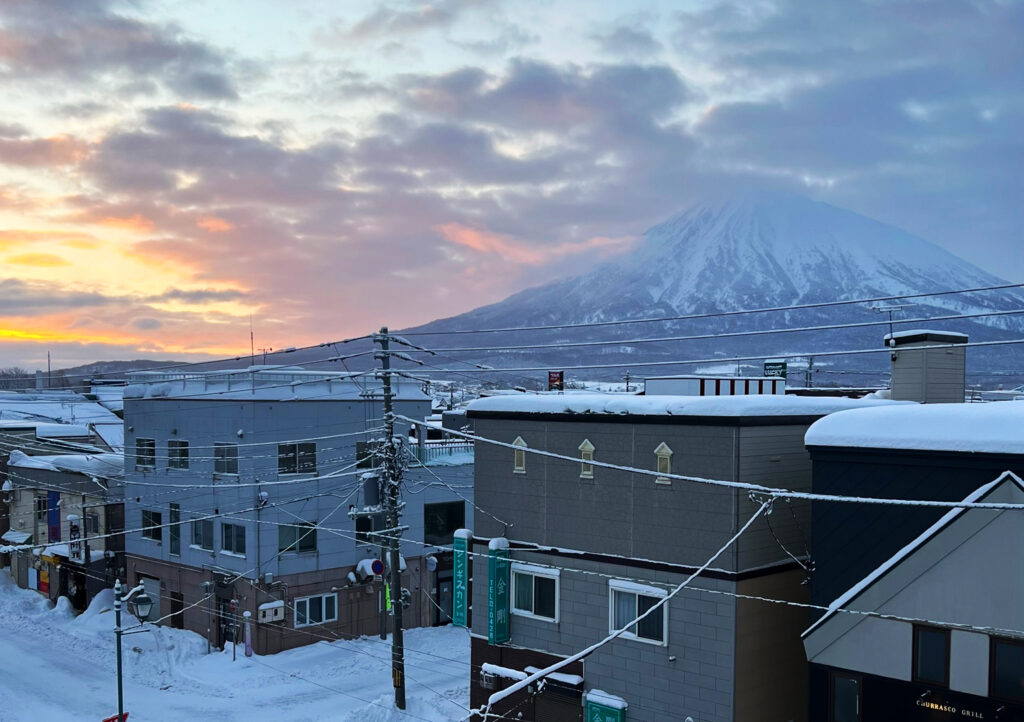
The view of Mt Yotei from Stay Living Niseko, Kutchan. Image: Robin Watts.
RENTAL & RETAIL
Each village has its own rental shops, but Hirafu has the biggest selection covering everything from budget packages to high-end demo skis and boards, and most also rent out winter clothing so you can turn up with nothing but a passport. A growing number of operators now offer delivery and fitting services too, bringing your gear straight to your accommodation.
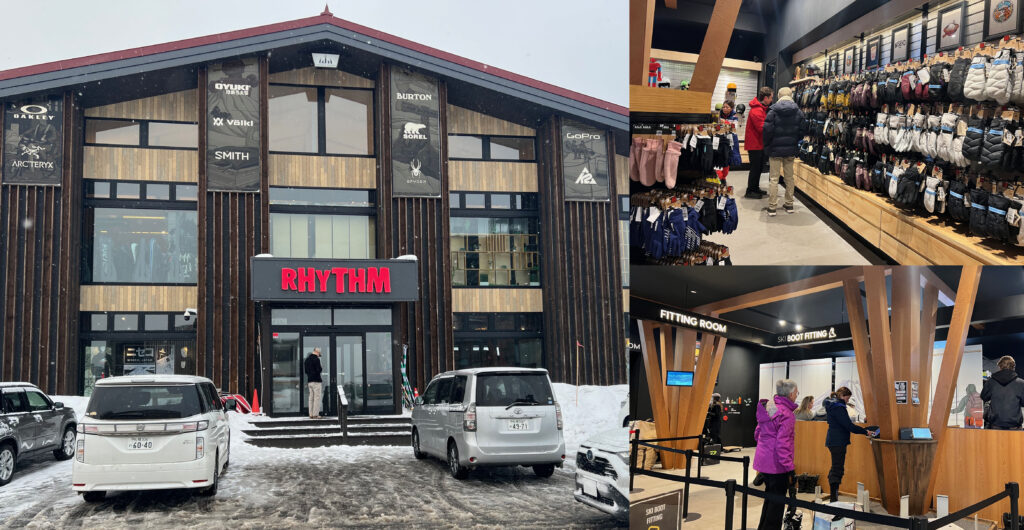
Rhythm’s rental and retail space in Hirafu is gigantic, with separate zones for each type of equipment.
If you’re looking for something different to do and you’re interested in snowboard design, drop in to Island Snowboards’ retail space in Kutchan and workshop for an unmissable tour of their facilities.
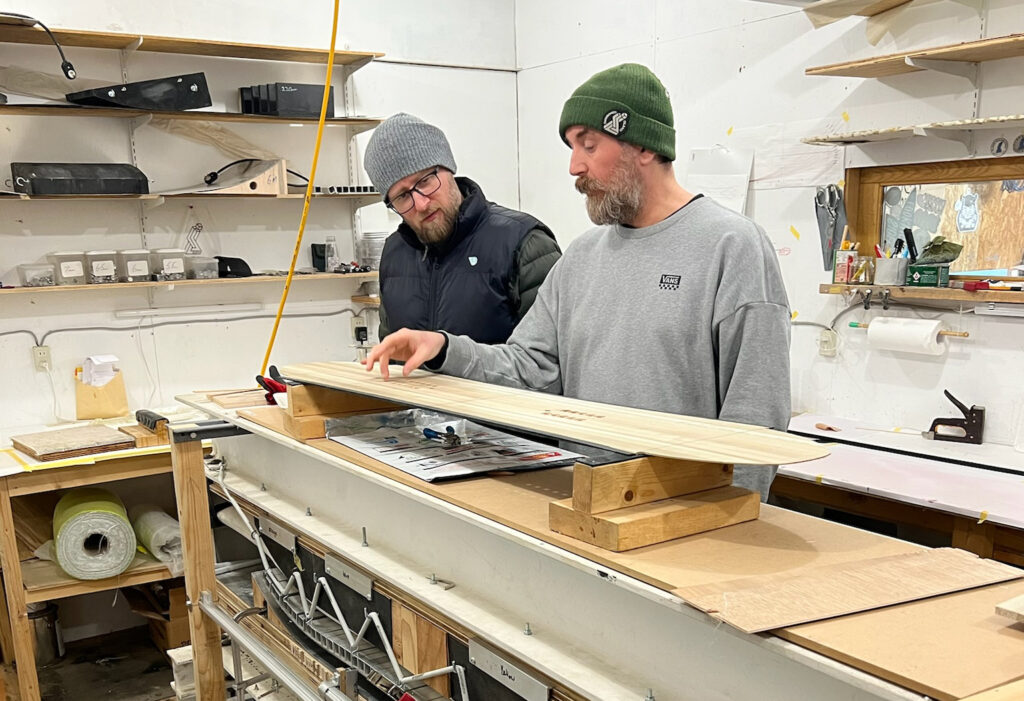
Island Snowboards’ workshop in Kutchan. Image: Jamie O’Brien
SNOWSPORTS SCHOOLS
With such a strong international crowd, English-language ski and snowboard lessons are everywhere across all four resorts, from group lessons for total beginners through to private guiding for those wanting to get into the backcountry safely. Booking ahead during peak season is strongly recommended, as the best instructors and guides get snapped up fast. Rhythm Rides is a solid option.
BACKCOUNTRY GUIDES
If you want to venture into the backcountry, then this is one of the best places in Japan to do it. Again book early. During our stay in Kutchan, Rising Sun Guides took us to Mt Yotei after a mega storm; Rhythm Japan showed us some of the steepest terrain in Hokkaido on Mt Shiribetsu; and while Whiteroom were planning to take us to Rusutsu, there was no fresh snow, so we drove to Kiroro and got knee-deep powder.
Attractions & Activities
ONSEN
Annupuri is the richest source of natural hot springs in the area, with long-standing favourites like Yugokorotei and Niseko Grand Hotel’s Konbu Onsen offering proper outdoor rotenburo baths surrounded by snow and forest. In Hirafu, the newly rebuilt Yukoro Onsen brings a slick, modern take on a bathhouse with roots going back to the early 1900s, with views towards Mt Yotei from the second floor. Several of the big hotels, including the Hilton in Niseko Village, also have their own onsen open to overnight guests or through a dining-and-bathing package.
BARS AND APRES-SKI
This is where Niseko genuinely separates itself from almost anywhere else in Japan. Hirafu is the beating heart of it, with a dense, walkable cluster of bars, izakayas and late-night spots that wouldn’t feel out of place in an Alpine resort in Europe. Jam Bar, Moon Bar and Tamashii Bar are reliable apres favourites, while more polished cocktail spots like Musu offer something a little more refined. Niseko Village leans towards relaxed hotel lounges, and Annupuri is quieter again if you’d rather have an early night after a big powder day.
Kutchan is a bit more subdued, but it has a karaoke spot: Utaya Karaoke, and a range of bars from very laid-back to extremely lively with DJs and dancing until late, including The Social, The Legend Niseko, Mecca and Smooth, and Sake Bar Sasa.
RESTAURANTS AND DINING
With something in the region of 100 restaurants and bars across the resort, Niseko has the best and most varied dining scene of any ski resort in Japan, by a distance. Hirafu holds the bulk of it, spanning everything from tiny, no-frills soba and udon spots to genuinely serious fine dining. Rakuichi Soba is the standout for handmade noodles, while newer arrivals like the French-inspired The Barn by Odin show how far the culinary scene here has moved on from basic ski-lodge food courts. Bookings are essential at the better restaurants in peak season.
On the mountain itself, expect a real mix of casual noodle and curry spots, western-style burger joints, and smarter options like The Lookout Cafe at the base of Niseko Village.
Kutchan is a real Japanese town and has a good mix of locals and tourists. There are plenty of restaurants and it’s just about possible to book the good sushi places a day or two before. Otherwise, there are other restaurants where you can just walk in. Prices are much more affordable.
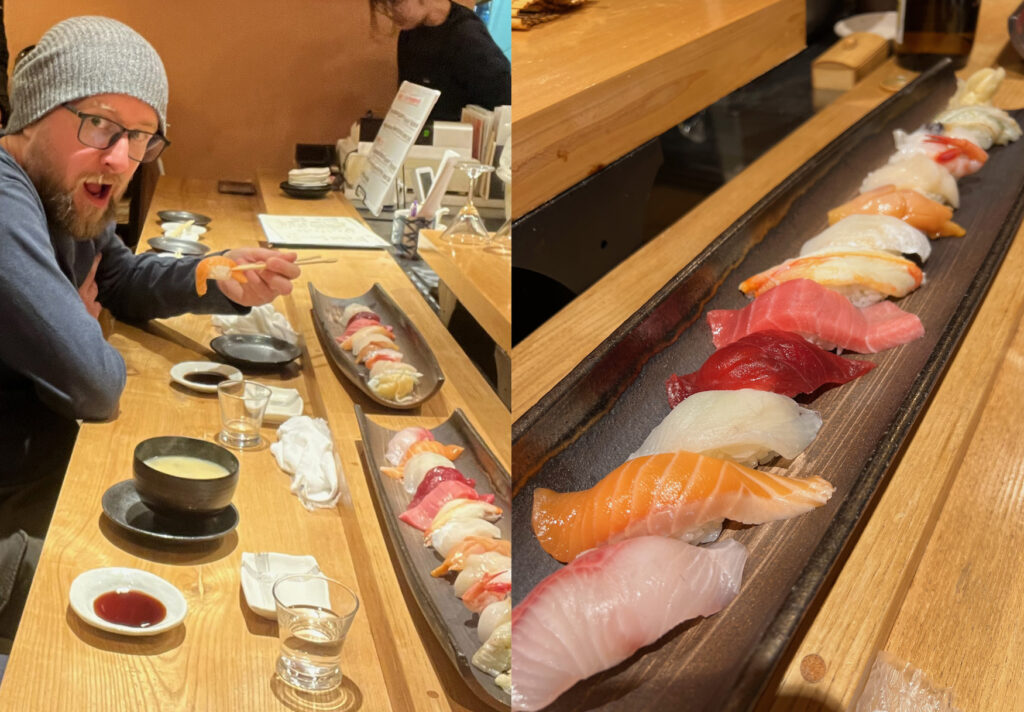
Japanese Cuisine Sato serves top quality sushi at very reasonable prices. The Tuna was amazing.
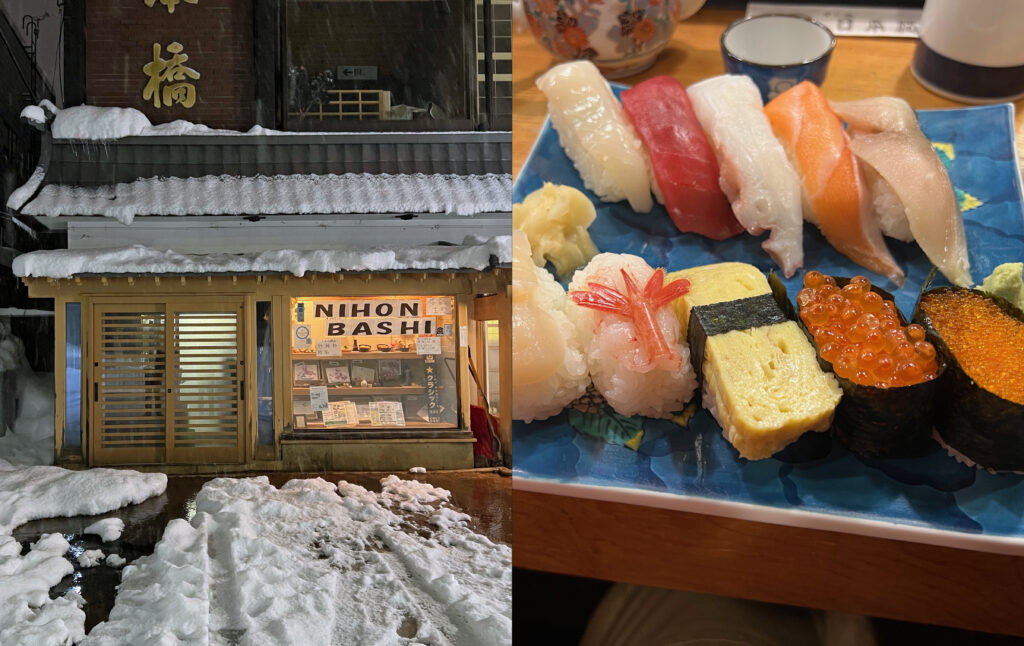
Nihonbashi is a little cheaper but there was no need to book.
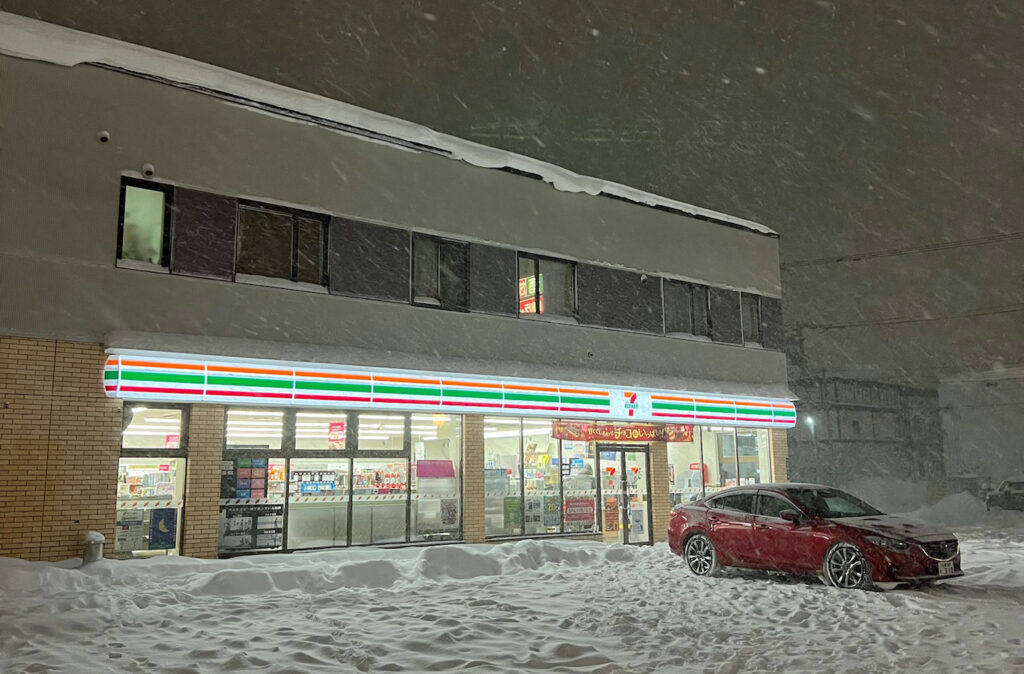
If all else fails, 7-11 is a trusty backup (Kutchan has three).
Getting to Niseko
Niseko sits around 100km southwest of Sapporo, roughly two to two-and-a-half hours by car or shuttle bus from New Chitose Airport. Chuo Bus runs direct reserved-seat services from both New Chitose Airport and Sapporo Station straight to Hirafu, Niseko Village and Annupuri throughout the season, alongside a handful of other private operators. If you’re driving yourself, Route 230 over the Nakayama Pass is the main road in from Sapporo, just make sure your car is fitted with proper studless winter tyres. AWD is also recommended, as all that light, fluffy snow can reduce traction, even with snow tyres.
Hirafu is a 15-minute drive from Kutchan. I had no problem parking each day at the overflow car park, which is up above the King gondola station and allows you to walk right onto the slope. Buses from Kutchan station are infrequent during the middle of the day, so check the timetables if you’re relying on the bus. Taxis can be booked through the Go app and have a roof rack for gear. Expect to pay around ¥5,000.
Rusutsu is just a 40-minute drive from Niseko or Kutchan. If you’re in the area, don’t even think about it. You have to visit. See our full resort guide here.
Niseko Moiwa (not on the Niseko United Pass) is a small two-lift hill right next door to Annupuri, can be less crowded and good fun on a powder day.
Kiroro is an hour’s drive from Niseko but just 45 mins from Kutchan. When the backcountry is rammed at Niseko, you can have everything to yourself at Kiroro. In my opinion, one of the best resorts in Japan for a day trip.
Culture & Ambience
Niseko doesn’t feel like other ski resorts in Japan, and that’s very much the point. Decades of investment and a huge international crowd (with an increasingly diverse mix of nationalities) have turned it into something closer to a European or North American resort town dropped into rural Hokkaido, right down to the English menus, the international ski schools, and the late-night bars.
That international vibe is exactly what some people love about it and exactly what puts others off. If you want proper modern infrastructure, five-star hotels, genuinely world-class dining and nightlife, and a resort that just works, Niseko delivers that better than anywhere else in the country. If you’re after a quieter, more traditionally Japanese ski town feel, you’ll need to go elsewhere.
So, who is Niseko United actually for? If you’re an experienced powder hunter chasing the deepest, driest snow on the planet and don’t mind fighting for it, mid-January to late February is as good as skiing gets in Japan. Just go in with your eyes open to the crowds, queues, and prices. If you’re a beginner, taking a family, or you’d rather have a more relaxed trip with gentler weather and fewer people, early March is the smarter call. You’ll still get days with fresh snow and a genuine Niseko experience, minus the -20C whiteouts and the battle for a dinner table. Niseko United isn’t somewhere to avoid, it’s a resort to time properly based on your needs.
The Author

You Might Also Like